On the Missouri frontier, enslavers routinely hired out the people they held in bondage to neighboring households, businesses, and industries, pocketing the wages themselves in a practice known as “hiring out.” The practice reflected the economics of small-scale Missouri slaveholding: enslavers who did not need a full labor force year-round used hiring out as a way to extract profit without bearing the full cost of feeding, housing, and clothing the people they claimed to own.
Enslaved people in Missouri were hired out as crew on Missouri River boats, as blacksmiths, and salt miners. Many enslaved people were trained in highly valuable trades such as bricklaying, blacksmithing, and carpentry. Enslavers advertised the skills of those they were hiring out in newspapers.
The process allowed businesses access to labor without requiring them to purchase enslaved people outright. It also expanded slavery’s reach. Hiring out drew non-slaveholding white households into the system, normalizing enslaved labor among people who might otherwise have had no direct stake in it. For the people who were hired out, the experience compounded an already brutal system as they were separated from their family and community.
Mary Bell, enslaved in St. Louis County, MO, was “hired out” to a minister when she was seven years old to take care of his three children at his home, effectively separating her from her family even though she was still owned by the same master.
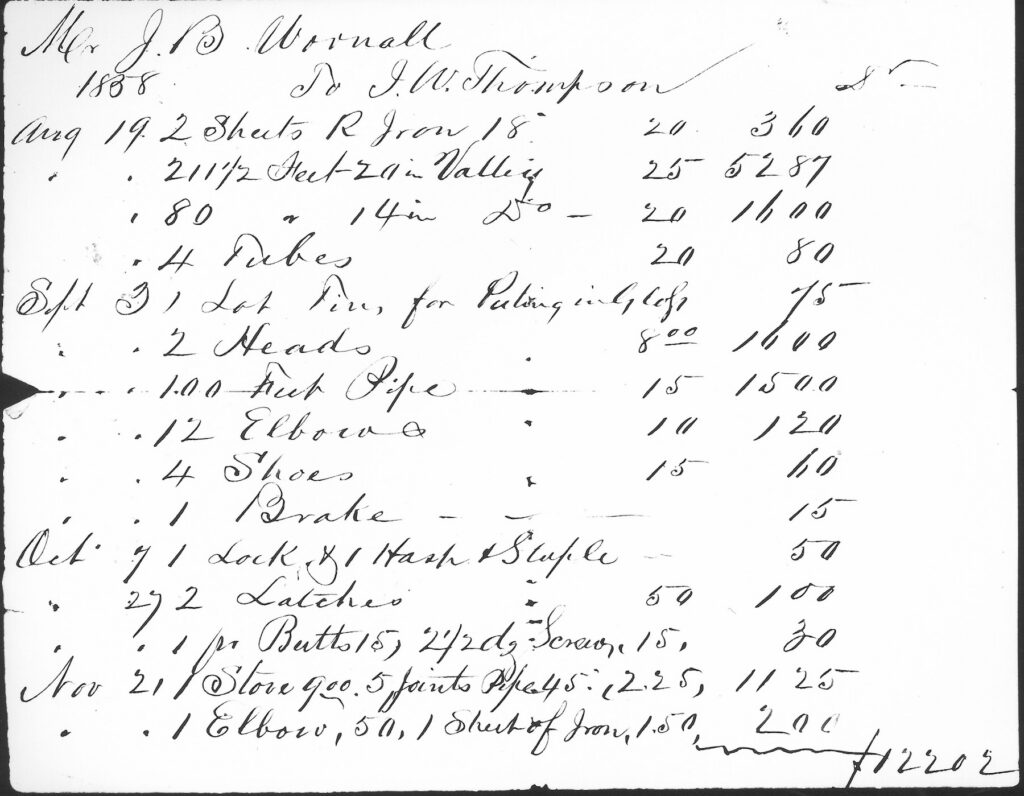
The Wornall House is likely a product of this system. John Wornall left behind substantial documentation about the hired white builders who oversaw construction and carpentry at the house including contracts, correspondence, and names. The same is not true for those who performed the physical labor of building the house. Likely, the home was in part built by enslaver laborers hired out from other properties.