“You’ve written enough short stories. You need to write a novel now.” So said my friend Sean Mulcahy.
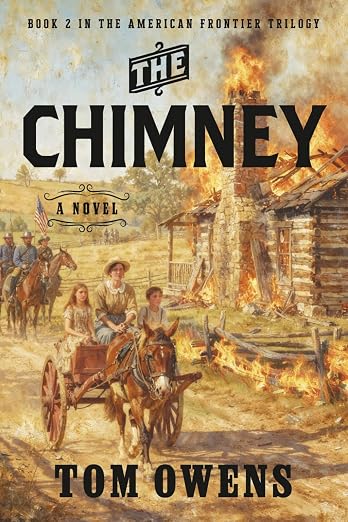
My first novel, The Chimney, was an adaptation of my short story by the same name. I shrugged off Sean’s suggestion until another friend, Tom Gray, told me he felt the short story version of The Chimney ended too abruptly. “I want to know what happened to the family,” Tom said after reading how Jane Duncan and her children were forced off their Bates County farm.
On top of the urgings of my friends, I was sufficiently motivated and informed to write The Chimney as a novel through my experience as a docent with the Wornall-Majors House Museums. I was familiar with Bates County through my family property there. Still, a novel was a daunting prospect for me; the scope and volume of a novel was new and vastly more complex than the short stories I had written.
As a work of historical fiction, I focused The Chimney on bringing to life the experience of common people caught in the crossfire of the Border Conflict and later, the Civil War. Including details about everyday life on a Missouri farm in the 1850’s and the thoughts and emotions of the characters were important for readers to gain an intimacy with them.
While many of the main characters came from my imagination, I had to place them within a historical context and have them interact with historical characters and events. It was important to the story for the Duncans to have realistic motivations for their actions.
Another essential piece of the writing was to create tension. As the story progressed, I tried to let the reader feel that something was always “just about to happen” or that Jane’s desire to return and reclaim her farm was just out of reach.
Building with words an imagined experience within a historical framework was easier in some ways than I first thought. The majority of families forcibly displaced by Order No. 11 were led by women as most of their husbands had been killed over the long years of conflict or were still off fighting. So pervasive was this aspect of the history that writing about it came to me with relative ease.
To bring it all together I had to commit the time to write in a structured way. I wrote 1,000 words a day, about three typewritten pages, and did this five or six days a week. At the start of every writing session, I read what I wrote the day before to ensure continuity and make corrections. It took me close to a year to finish the first draft. Editing the manuscript required substantial additional time and effort to correct details and, in places, delete and add a good deal of material.
The title of the short story and the novel seemed obvious to me as the limestone chimneys were the only physical structures left standing in “The Burnt District”. Something that could withstand the ravages of war and incineration struck me as the right symbol for the resilience and fortitude exhibited by Jane Duncan.