Enslavement on the Wornall Farmstead
Slavery was already established in Jackson County, Missouri, when the Wornalls arrived in 1843. At the time, enslaved people made up about 15% of the population of the state. Missouri was what is known as a “small scale slaveholding state” – most slaveholders held 10 or fewer enslaved people. Even for those who did not have slaves, slavery was a part of everyday life.
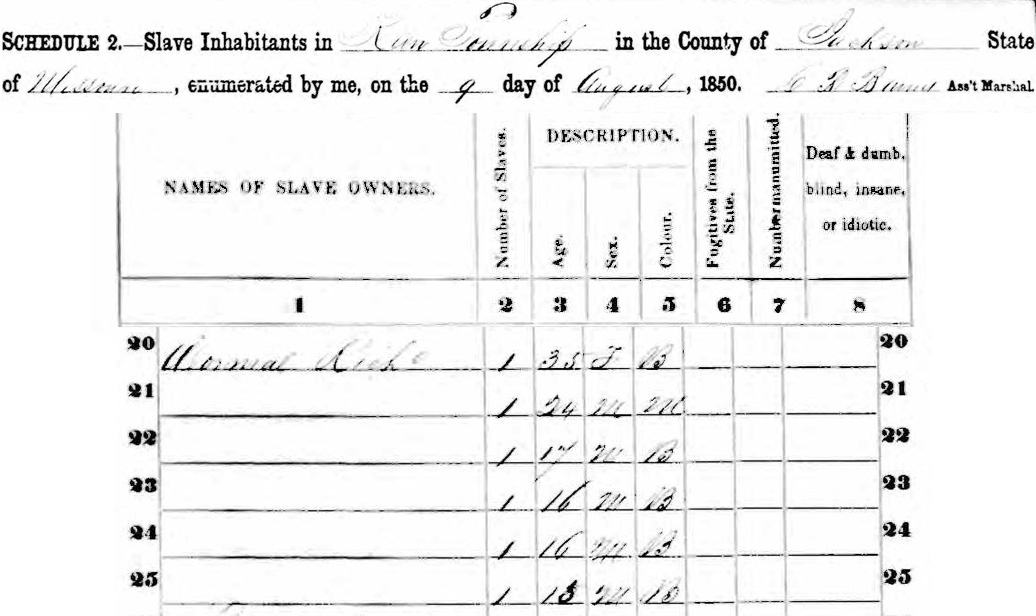
According to census records, Richard Wornall held six slaves on the Wornall property in 1850: five young men between the ages of 16 and 24 years old, and a 35-year-old woman. Eventually, John Wornall became the enslaver of these people after his father returned to Kentucky. By 1860, there were four enslaved people on the property: two adult women, a young man, and a female child.
The wealth and prosperity of the Wornall family would not have been possible without the work of the enslaved. Enslaved people would have been involved in all aspects of life on the farm. They would have planted, tended, and harvested crops, reared the Wornall children, cooked, cleaned, and run errands in addition to maintaining their own lives and households.
Escape from the Wornall Farm
In 1863, those enslaved by John began receiving some kind of wage. It is extremely unlikely that this was a significant amount of money, and it was most likely a way for John to economically incentivize them not to run away from the Wornall farmstead. The tumult on the Missouri-Kansas border opened increasing opportunities for escape, which those enslaved at the Wornall House took advantage of. On a Saturday night, two women (aged 43 and 49), a child (aged 6), and a man (aged 28) disappeared from the farm, most likely slipping into Kansas. They cleverly picked Saturday because Sunday was a church day and a later start for the Wornall family, giving the escapees additional time. There is no record of what happened to them after they escaped, but many escaped slaves headed through Iowa and further north into Canada.
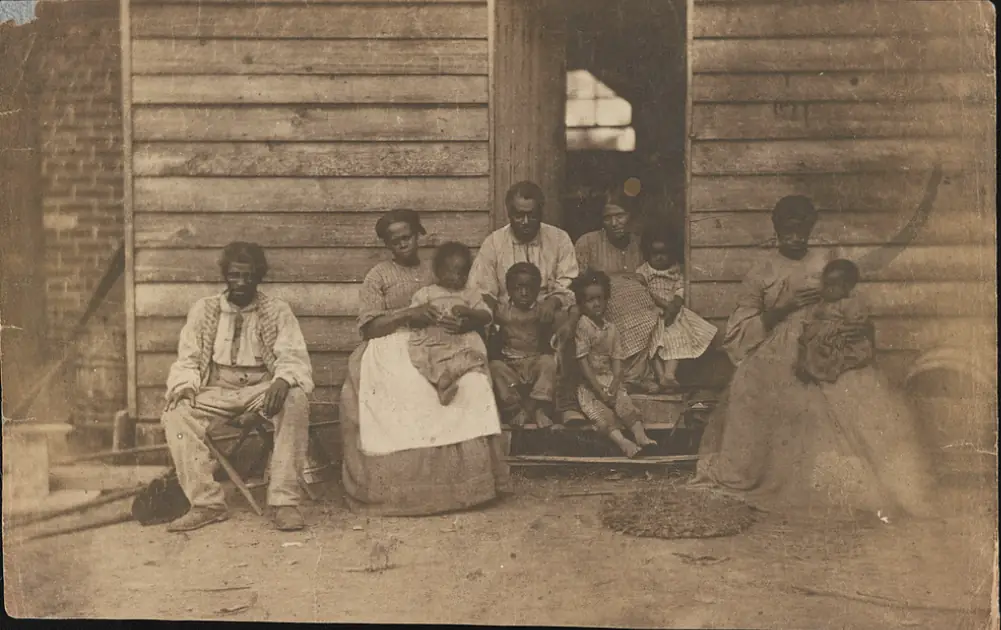
Images: A Family of Slaves in Hanover County, Virginia, 1862, Library of Congress ds 05506 [top]; 1850 Slave Schedule showing an entry for Richard Wornall, US Census [right].
Naming the Enslaved
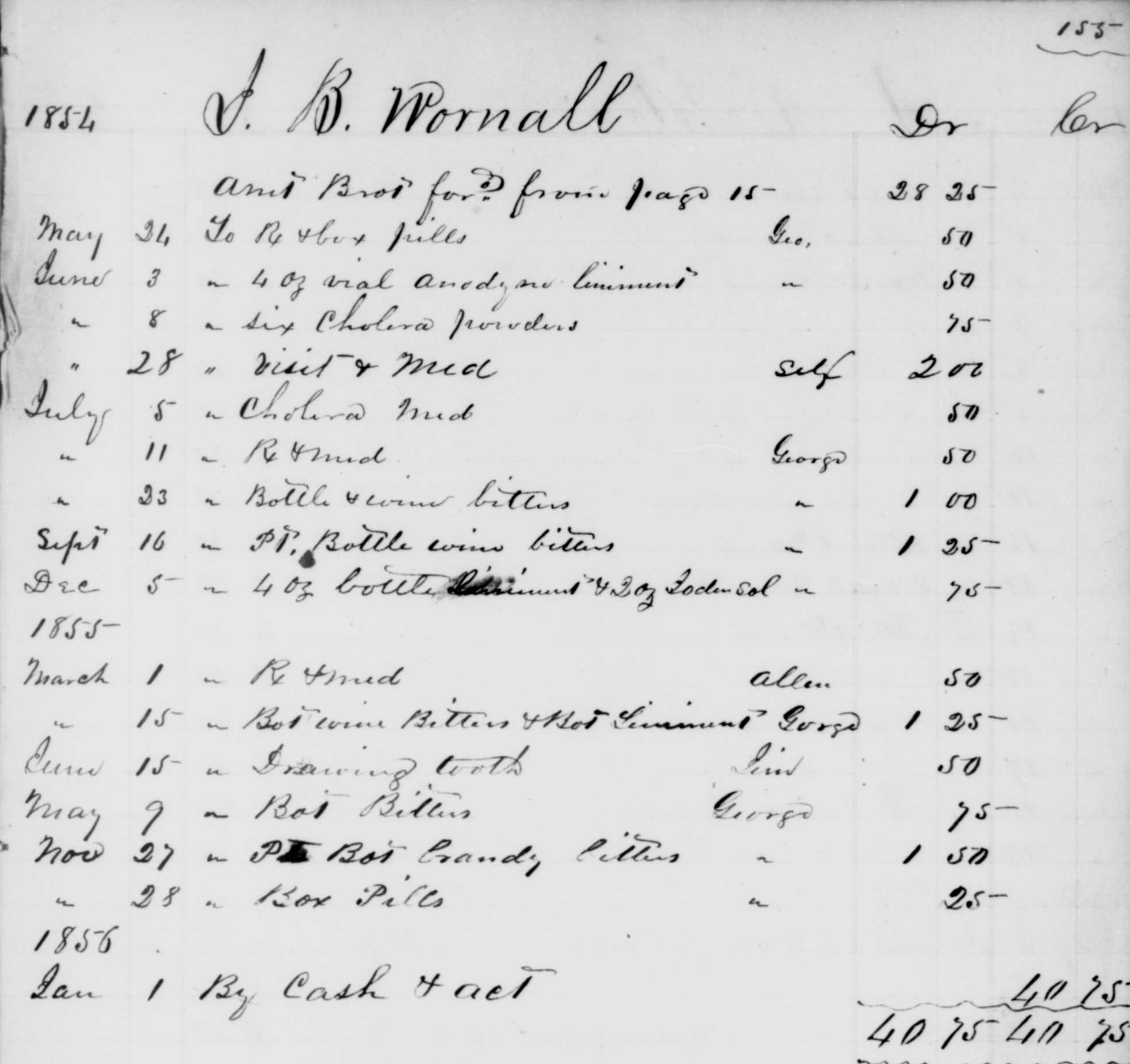
The identities of those enslaved at the Wornall House have long been unknown. Any record of their names has been lost or never existed in the Wornall family papers. However, when researching Wornall family medical receipts, museum staff came across unfamiliar names: George, Allen, Jim, and Nancy. Who were these individuals? They were not the names of family members, field hands, or friends. Whose medical care would John Wornall have paid for, if not family members or employees?
Wornall/Majors House Museums has concluded that George, Allen, Jim, and Nancy were most likely enslaved, finally returning their names to the historic record.
Learn More by Visiting
The Wornall House has comprehensive signage about slavery at the Wornall House, using primary sources related to the Wornall family, the Missouri slave-holding community, and enslavement in Missouri and across the United States. George, Allen, Jim, Nancy, and the others enslaved at the Wornall House were just as present at the home as the Wornall family, and despite a lack of information about their individual lives, we hope to honor their existence by providing as much comprehensive information as possible to explore what their lives may have been like.
Image: An excerpt of the 1854 account books of Dr. James W. Parker, held by the Missouri Valley Room, Kansas City, Missouri Public Library.
Support These Stories
Help Wornall/Majors make history accessible and preserve two Kansas City landmarks.