Sugar in the 19th-century United States was a complex tale of scarcity, industrial innovation, cultural shifts, and human suffering.
Sugar in the Victorian Era United States
In the early 1800s, sugar was still a luxury item in American households, reserved for special occasions and the wealthy elite.
Even in well-to-do households, sugar was so valuable it warranted its own piece of furniture: the sugar chest. These ornate cabinets, often locked to prevent theft by servants, children, or enslaved people, featured multiple compartments for different grades of sugar, loaves, and confections. A sugar chest was a status symbol, signaling that a family could afford both the luxury of sugar and the craftsmanship to store it properly.
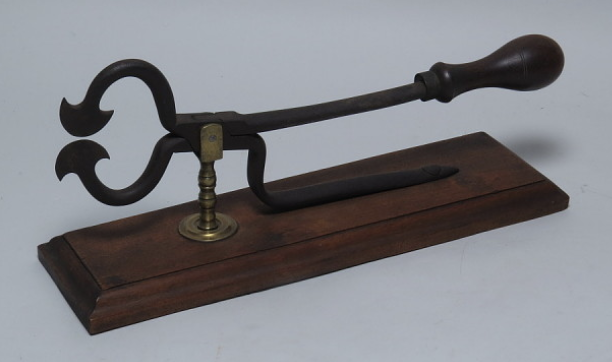
The Wornall House collection features two sugar-related items. Sugar nippers were cast-iron scissor-like instruments with one smooth blade with a small hold about a third of the way down, and the other with a flat, smooth side. They were used to cut sugar off from the hard, cone-shaped loaf common prior to the mid-19th century.
In the Kitchen sits a sugar chest. These often-ornate cabinets were often locked to prevent theft by servants or children. They often had multiple compartments for different grades of sugar, loaves, and confections.
Sugar in abundance
American families embraced this new abundance. Sugar appeared in conical loaves for baking, as well as in an array of candies and chocolates. Sugar cubes were invented in in 1841 and grew in popularity in the 1870s as a symbol of cleanliness and modernity. They featured in proper Victorian parlors for tea and coffee. A sugar bowl with designated sugar tongs was a sign of wealth and hospitality.
The Darker Side of Sugar
Those seemingly innocent sugary teas came with a dark side. Much of the sugar consumed in America was produced by enslaved people. Sugar plantations in the Caribbean and the American South were among the deadliest sites of forced labor, with mortality rates so high that planters often calculated it was cheaper to import new enslaved workers than to sustain existing ones.
Abolitionists urged consumers to boycott sugar produced with the labor of enslaved individuals. Ottobah Cugoano, a formerly enslaved writer, famously declared it better to “pay a little more money” for sugar than to “drink the blood of iniquity.”
Even after emancipation, exploitative labor systems persisted. In places like Louisiana and Hawaii, formerly enslaved people and immigrant workers faced indentured servitude and coercive wage arrangements that kept sugar production profitable at human cost.
Further changes in sugar
The age also witnessed technological advances that made sugar even more available. Mechanized refining, steam-powered factories, lowered costs, and standardized the quality of sugar. Companies like Frys in Bristol and their American counterparts began producing chocolate and confections at an industrial scale, embedding sugar into everyday life. By the 1890s, sugar had made the final transfer from luxury to necessity. It appeared in processed foods, medicines, and even animal feed. The Victorian obsession with sugar laid the groundwork for our modern love of sugar.