During the Great Depression a division of the Works Progress Administration called the Federal Writers’ Project employed writers to record the life stories of Americans. Running from 1936 and 1938, the FWP hired writers to collect the recollections of formerly enslaved people.
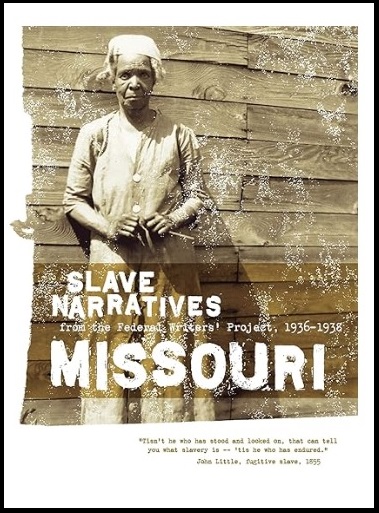
The Missouri narratives are part of the larger collection published as Slave Narratives: A Folk History of Slavery in the United States from Interviews with Former Slaves. More than 2,300 first-person accounts and 500 black-and-white photographs were included.
Those interviews became especially important because they preserved the voices of people who had lived through slavery. Their testimonies show enslavement in Missouri both as an institution and as a lived reality.
For many enslaved Missourians, family life was shaped by distance and uncertainty. Spouses were often owned by different enslavers and lived on separate properties in a system known as abroad marriage. Children could be sold, hired out, or moved away from parents. These conditions made it difficult to maintain stable family ties, even when people worked to preserve them. In the Slave Narratives, formerly enslaved people shared how these disruptions affected their lives..
The interviews also reveal the ways enslaved Missourians remembered and interpreted their experiences after emancipation. Some spoke about hard labor, punishment, and the lack of freedom over their own movements. Others described family relationships, religion, survival strategies, and the struggle to build new lives after slavery ended.
However, the experiences of the interviewees were filtered through the lens of the writer because they chose how the interviews were conducted, what questions were asked, and the style of English language were presented in.
View the Missouri narratives in the collection of the Library of Congress: https://www.loc.gov/item/mesn100/