Early European depictions of gender in indigenous communities were biased. Although European colonists viewed the gender divisions between indigenous men and women as stark and restricting, indigenous gender was often more fluid than in European society, both in terms of gender identity and social roles.
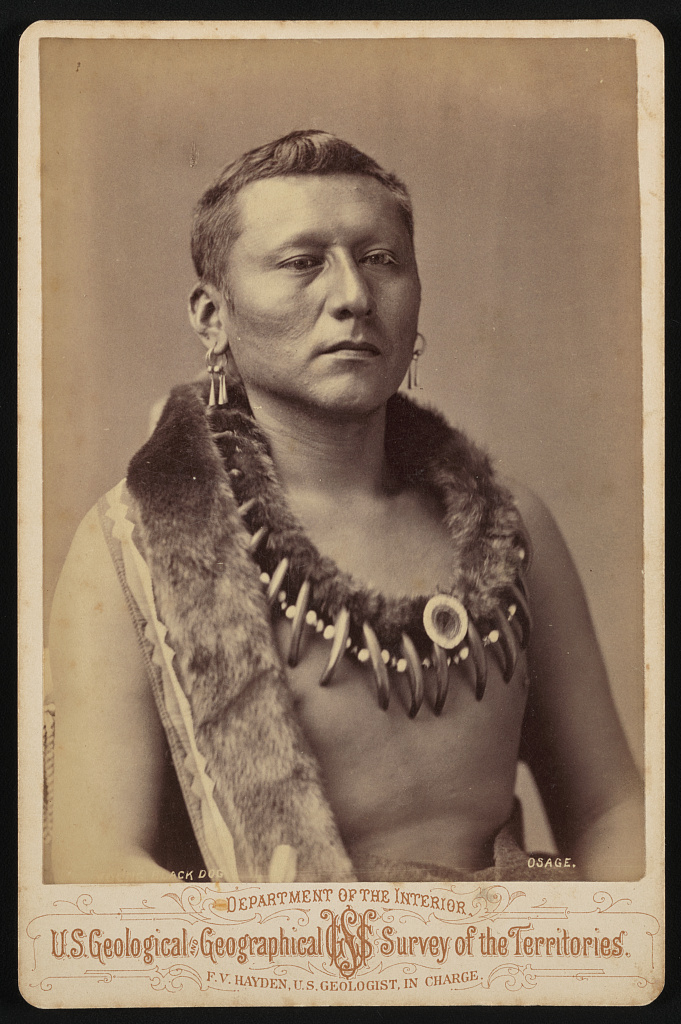
Indigenous groups in Missouri, especially the Osage in southwestern Missouri, held diverse gender roles that transcended the traditional gender binary in the European-American tradition. Osage life operated under a system known as gender complementarity: men and women performed different roles that were equally valued in Osage society and their spiritual world.
Spirituality was a part of the Osage’s day-to-day operations. Their priesthood organized life by celestial and seasonal cycles, specifically what they observed to be masculine and feminine forces in nature. The genders balanced each other out and had equal spiritual reverence––another example of gender complementarity. According to the creator of everything, Wakonda (“great mysterious” in the Osage language), motherhood was sacred and women held innate power by virtue of their ability to create life. This sacredness led women to hold a spiritually important role for the Osage, and they routinely took part in spiritual ceremonies.
In addition to both genders holding an equally important status, many indigenous societies across the continent had fluid gender identities. Osage “Mixu’ga” were men who took on women’s social roles and wore women’s clothing. The term translates to “instructed by the moon” because it was believed that they were spiritually guided through dreams and visions to become women. Some Osage men took on split gender roles rather than complete changes. While there is little European documentation of Osage women taking on men’s roles, there is evidence of indigenous women taking on alternative gender roles in other plains tribes.
The prehistoric Oneota culture that influenced many indigenous groups in Missouri had gender divisions, and thus so did Missouri’s many indigenous communities: men hunted and fished, made tools, conducted trade, and engaged in warfare; women farmed, cooked, made clothing and pottery, and cared for children. The Osage, like other Missouri tribes, had patrilineal descent. This meant that a child’s identity was determined by their father’s lineage and clan. However, society and family life was organized matrilineally on a day-to-day basis: couples and their children lived with the wife’s family. Because of this, family homes were believed to be owned by women. In these societies, it was customary for women to be in charge of building lodgings. For example, Missouria women constructed their year-round villages and temporary camps during hunting trips.
In indigenous groups across Missouri, women and men held different but equally important social roles that all contributed to the smooth operation of their societies. Early European depictions of indigenous communities as starkly divided and constrained along gender lines was influenced by a belief that women’s work was less valuable than men’s work, a belief indigenous groups did not share.