If you’ve seen the movie Project Hail Mary, you might remember when Ryland Grace, the lead character, shared a fun fact: centrifuges were used during the Civil War era to make butter. While his timeline was a bit off, the heart of the fact is true. The centrifuge—now a staple in laboratories and crucial to breakthroughs like DNA discovery—was invented to separate cream from milk more quickly.
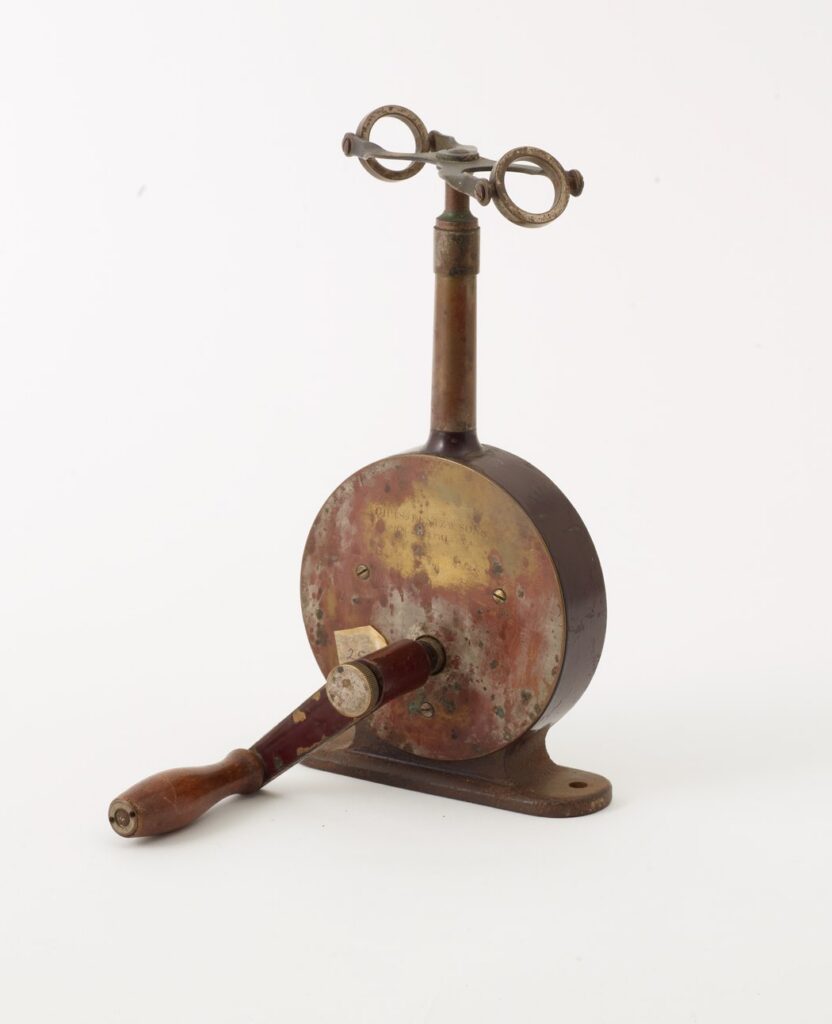
Early spinning devices go back to the 1400s, but the key breakthrough came in 1864, when German brewer Antonin Prandtl built the first true cream separator. His hand-cranked machine used spinning to do in minutes what once took hours by gravity alone, pushing heavier milk outward and letting lighter cream collect inside.
Just five years later, Swiss physician and biologist Friedrich Miescher used similar separation techniques in his laboratory. In 1869, he isolated “nuclein” (what we now know as nucleic acids) from the nuclei of white blood cells. This discovery laid the groundwork for future breakthroughs in DNA research. Around this same period, dairies began using centrifuges to streamline cream separation, blending new science with everyday needs.
By 1878, the first industrial-scale centrifuges hit the scene—again, with dairy in mind. Gustaf de Laval didn’t invent a new separator, but he did patent, demonstrate, and manufacture a motor-driven machine that changed the game. His design could run continuously, processing up to 130 liters per hour. With an inlet for milk and two outlets for cream and skim milk, it let dairies work without ever having to stop the machine.
What started as a clever way to make butter ended up transforming science. The same spinning power that separated cream from milk could also isolate tiny materials by density, opening new doors for researchers. Once scientists realized how precise and reliable centrifuges were, these machines made the leap from dairies into laboratories—where they became essential for studying cells, blood, and countless other biological wonders.