“Abroad marriage” was a common feature of slavery in Missouri, particularly in rural areas where enslavers often held relatively small numbers of enslaved people. The term refers to marriages in which spouses were enslaved by different individuals and lived on separate properties, sometimes miles apart. Because enslaved people had no legal authority over their movement or family life, maintaining these relationships required permission. A husband might be allowed to visit his wife and children once or twice a week, depending on distance, labor demands, and the decisions of enslavers. These visits were often brief and uncertain, shaped by a system that placed control firmly in the hands of enslavers rather than the families themselves.
Because Missouri was a small-scale slavery state this arrangement was especially common. On farms and in households where enslavers held only few people, enslaved family members were spread across separate properties. Enslavers sometimes encouraged unions because children born to enslaved women were also enslaved, increasing the enslaver’s labor force.
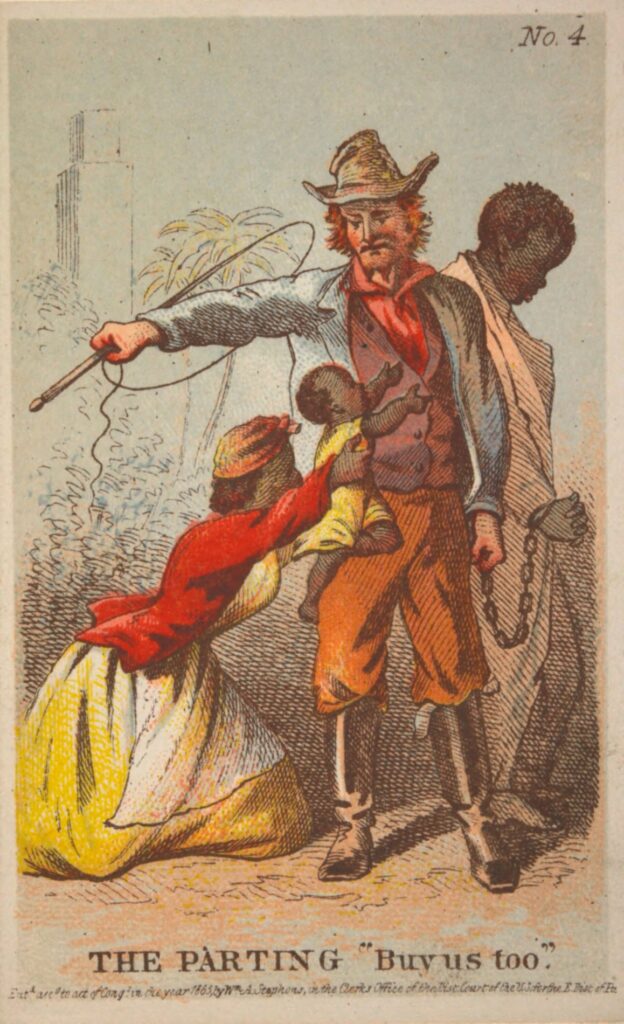
Enslaved marriages, partnerships, and kin networks existed without legal protection leaving families vulnerable to separation and disruption. Sale, hiring out, or forced relocation could separate spouses and children at any time, often permanently. Family ties were continually at risk.
First-person accounts give insight into how these conditions shaped the lives of enslaved people. Sarah Graves of Skidmore, Missouri recalled that her mother was forced to leave her husband behind when she was taken to another state. Later, when pressured by an enslaver to remarry and bear additional children, she resisted. Instead, she chose to marry a man who could not father children, making a decision within the limited choices available to her.
These stories also reflect the ways enslaved people maintained family life and community within a system designed to deny both. Despite distance and restriction, they continued to build relationships, protect one another when possible, and make decisions that asserted some measure of control over their lives.