The state of Missouri and the Missouri River are both named after the Missouria tribe who inhabited the mouth of the Grand and Missouri Rivers. However, even the name Missouria was not derived from the indigenous group it referred to. In the Missouria’s language––a dialect of Chiwere––their name is Nyut’achi or “people of the river’s mouth.” They historically lived along the Great Bend region of the Missouri River in present-day Salina County, where it connects to the mouth of the Grand River. Their travels along the Missouri River regularly brought them into contact with the Illini tribe, who inhabited the Mississippi River Valley. The name Missouria derives from French fur traders transcribing the Illini’s name for the Nyut’achi, which was Mihsoori or Wemihsoori meaning “people of the wood canoes” in the Algonquin language.
The Missouria were expert water navigators. The Missouri River could be hazardous to navigate due to its swift waters, so the Missouria built canoes from giant logs of cottonwood, sycamore, or walnut that were between twenty and fifty feet long, hence the Illini naming them “people of the wood canoes.” The Missouri River is faster than the Mississippi, and the thin bark canoes used by Mississippi River Valley people would have been smashed in swift Missouri currents.
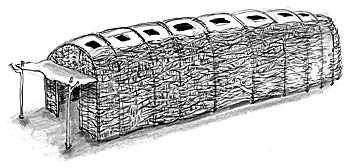
Like other nearby indigenous communities (such as the Otoe, Osage, Ioway, and Kansa) the Missouria lived in bark houses called “nahachi” and prairie-mat lodges called “chakiruthan” or wigwams. They were extremely mobile because they hunted animals by following migrations patterns, and their villages were occupied seasonally to coincide with planting and harvesting crops. Hunting was a bigger source of food for the Missouria than agriculture, and they went on hunting trips throughout the summer, fall, and winter. Men hunted big game between the Grand and Des Moines rivers during these trips. In the fall women grew crops like corn, beans, squash, melons, and pumpkins, and foraged for fruit, seeds, and nuts year round.
Women also constructed their villages and hunting camps. In daily life, Missouria society was patrilineal, meaning a child’s lineage was determined by their father’s clan. Yet within each household, the family structure was matrilineal: although a child belonged to their father’s clan, children and their fathers lived with their mother’s family. Much of their social and cultural structure was similar in nature to the nearby Otoe tribe, who the Missouria had a close alliance with.
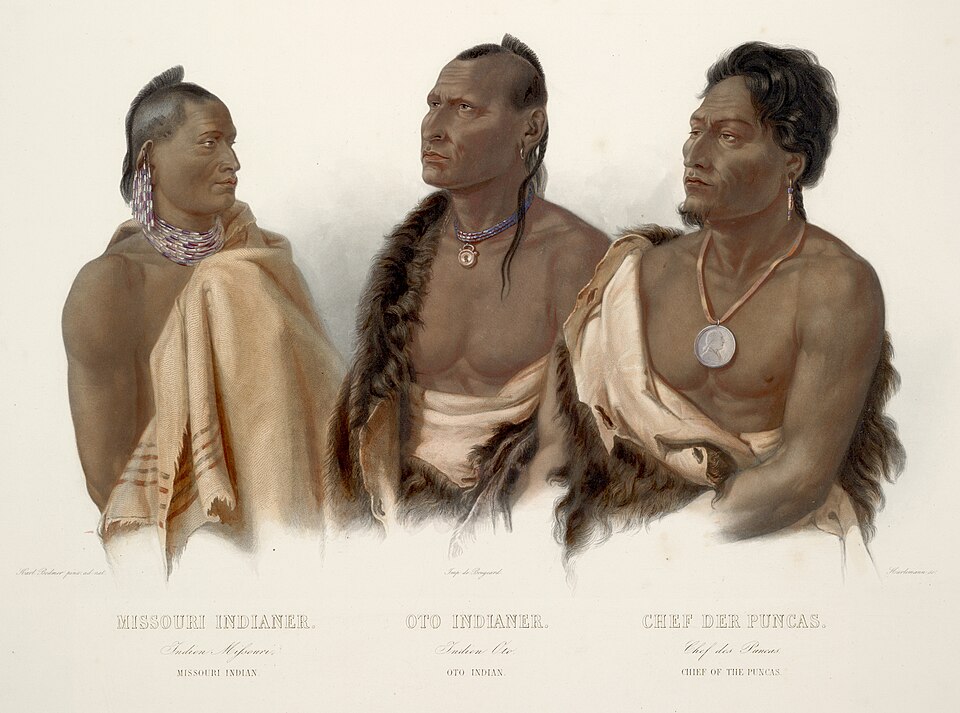
The Missouria slowly began to merge with the Otoe in 1789 after facing threats caused by encroaching European settlements and other tribes. By 1829, a smallpox outbreak among the remaining independent Missouria people led them to officially join the Otoe. Despite their significance to the area and the cultural impact they had on early Missouri, including their role as namesakes, the Missouria were systematically pushed further and further west before being fully removed from Missouri along with every other group indigenous to the area. The Otoe-Missouria were legally forced to relocate to the Kansas-Nebraska territory in 1854. In 1880 they again moved to Oklahoma and currently live in Red Rock.